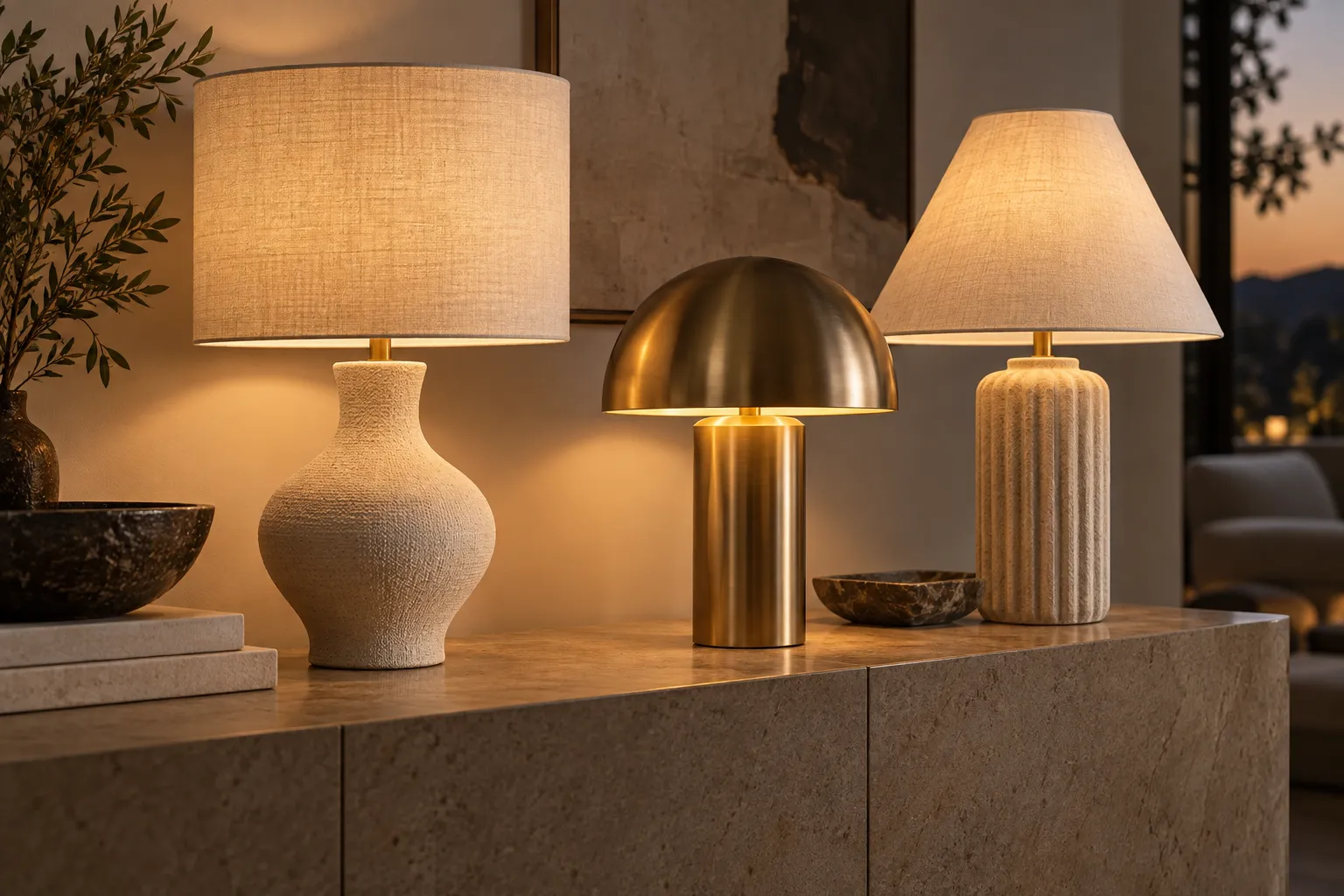
Lighting changes how a home works long before anyone notices the fixtures. It helps someone read without strain, prepare food with confidence, move safely at night, and relax when the day is finished. A room lit only by one bright ceiling source can meet one of those needs at a time, but rarely all of them well. Layered lighting gives different tasks their own light and lets the atmosphere change without rearranging the room. The familiar categories are ambient, task, and accent lighting. They are useful as a planning framework, yet a good scheme is more than three fixtures. It considers daylight, surfaces, glare, controls, and the actual positions of people in a room. A beautiful pendant can be uncomfortable from the sofa; a subtle under-cabinet strip can be the most useful light in the kitchen. Begin with what happens in each space, then choose the sources that support it.
Start with the activities, not the fixtures
Write down the activities that happen in a room over a normal day. A living room may need light for cleaning, reading, conversation, television, and a late-night trip to the hallway. A kitchen may need strong light over preparation areas and a gentler setting for dinner. A bedroom may need a way to get dressed, read, and move around without waking someone else. If you start with a catalog of attractive lamps, it is easy to end up with several beautiful objects that all solve the same problem.
Mark the positions where people actually perform each task. A reading light should illuminate the page from a comfortable angle at the chosen chair, not merely look balanced beside the sofa. A desk lamp should cover the work surface without creating a bright reflection on a screen. A kitchen light should reach the counter rather than being blocked by a person standing beneath a ceiling fixture.
Also note what should remain dim. A bright source behind a television can distract, while a gentle background light may make the screen area more comfortable. The purpose of a lighting plan is to offer usable choices. Different activities should not all depend on the same switch.
Understand ambient light as a background layer
Ambient light helps people understand the shape of a room and move through it. It does not have to come from a row of downlights. Light reflected from a wall, a shaded ceiling fixture, a large floor lamp, or a combination of sources can provide a comfortable background. The best choice depends on ceiling height, room proportions, and the finish of surrounding surfaces. Pale walls reflect more visible light than dark ones, while glossy surfaces may create unwanted highlights.
Evenness is not always the goal. A room can feel more interesting when some areas are softly lit and others remain quieter, provided people can move safely. In a corridor, a modest wash on the wall may be more pleasant than a bright spot on the floor. In a living room, lamps at different heights can create a sense of depth that a single overhead fixture cannot.
Be careful with fixtures that expose the light source directly. From standing height they may look fine, but from a low sofa they can produce glare. View proposed fixtures from the seats and routes where they will be seen. If you are considering recessed lights, placement and beam characteristics matter as much as the number of fittings. For any electrical work, use a qualified local professional and confirm the fixture's installation requirements.
Give task light a precise destination
Task lighting is the focused layer for reading, cooking, working, grooming, or making something. Its success is judged by what it illuminates, not by the fixture's style. In a kitchen, light beneath upper cabinets can reach the worktop where an overhead light may cast a shadow. At a desk, an adjustable lamp can move with the task. Beside a bed, a directed light can support reading while allowing the rest of the room to stay dim.
Consider the direction of the light and the body using it. A lamp placed on the wrong side may cast a hand's shadow over a notebook. A mirror light that shines only from above can create unhelpful facial shadows. A fitting too close to eye level may make a simple task uncomfortable. Test the position with a temporary lamp or portable light before fixing anything permanently.
Task light should be easy to reach and control. A bedside light that requires crossing the room to turn off is poorly planned, even if it looks symmetrical. A kitchen preparation light on a separate control can be used without illuminating the dining area. The best task lighting disappears into the routine because it is exactly where it is needed.
Use accent light to reveal depth, not to add clutter
Accent lighting can draw attention to art, a textured wall, shelving, or a plant. It can also give a room depth after dark by lighting a vertical surface rather than only the floor. This layer should be selective. If every object is highlighted, none feels special, and the room may become visually restless. Choose one or two elements that deserve attention and think about how their appearance changes from day to night.
The angle and distance of a source affect what is seen. Light skimming a textured surface can emphasize relief; direct light on glazed art may create reflections. A shelf light can make a collection visible, but it may also reveal every cable and dust-catching recess. Consider maintenance and the possibility of changing the display. Fixed accent lighting that only suits one arrangement can limit a room later.
Accent light is often most effective when it is subtle. A small lamp on a cabinet may add warmth to a corner without demanding architectural work. A picture light may be appropriate for a favorite work, but check that it suits the artwork and does not produce glare. The aim is to make the room more legible and inviting, not to create a showroom effect.
Pay attention to glare and contrast
Glare is not limited to a bulb shining directly into the eyes. It can appear as a reflection on a television, a bright patch on a polished table, or a fixture visible in a mirror. Sit and stand in the places people use, then look toward each proposed source. A shade, diffuser, change in position, or different direction may solve a problem that more brightness would only make worse.
Contrast matters as well. A very bright desk lamp in an otherwise dark room can make the surrounding space feel uncomfortable when the eye moves away from the page. A gentle ambient layer can support focused task light. Conversely, too much background light can reduce the atmosphere of a dining area. Think of the relationship between the bright task and its surrounding field, not just the output of one lamp.
Surface finishes influence the result. Pale matte walls scatter light differently from dark glossy cabinets. A stone counter may reflect a strip light into a seated person's view. Test samples under the actual lighting when possible, especially if finishes and fixtures are being chosen at the same time. The right solution may be a more diffused source or a less reflective material rather than a change in wattage.
Coordinate daylight and artificial light
Natural light is the first layer in many rooms, and it changes constantly. Observe where sun enters at the times a room is used and where it creates glare. A desk facing a bright window may need shading or a different orientation. A reading chair by a window may work beautifully in the morning but need a lamp in the evening. Artificial lighting should complement those patterns rather than assume a room is always equally bright.
Window treatments can make a lighting plan more flexible. A light-filtering layer may soften strong daylight while preserving a view; a more opaque layer can improve privacy or reduce screen reflections. A room with dark walls may need more deliberate artificial light after sunset, while a pale room may need careful control to avoid an overly flat, bright appearance.
Do not select fixtures solely under showroom lighting. Bring samples or photographs into the actual room and look at them through the day. If possible, test a portable source in the proposed position after dark. This simple trial can show whether a shade produces a warm pool of light or an unexpected shadow. It can also prevent unnecessary permanent work.
Separate controls so the room can change
Independent control is what turns multiple fixtures into useful layers. If ambient, task, and accent lights all turn on together, the room still has one setting. Separate switches, plug-in controls, or compatible dimming can let the same room move from work to dinner to quiet evening. Keep the controls intuitive for guests and household members who do not want to use a phone.
Dimming requires attention to compatibility. A lamp, bulb, driver, and dimmer may not all work together as expected. Check the maker's instructions and ask a qualified local electrician about any fixed installation. Avoid assuming that a product labeled dimmable will work smoothly with every existing control. A plug-in lamp with a simple switch may be a better first step in a rented home.
Lighting scenes should match real behavior. A useful evening setting might leave a safe route through the room while reducing brighter task lights. A cleaning setting can be brighter and broader. If smart controls are involved, preserve a straightforward manual way to operate the lights. A system that is impressive but confusing will be used less often than a few well-placed switches.
Choose color and finish with the whole room in mind
The appearance of light depends on the source and the surfaces it touches. Two lamps described with similar color terms can still look different because of their shades, placement, and surrounding materials. Rather than trying to make every source identical, aim for a coherent feel within the room. Extremely cool light beside a very warm shaded lamp can make the space feel disjointed, while a small difference between task and ambient light may be useful.
Fixture finish also affects the visual scheme. A metal pendant can become a focal point, while a wall light painted to relate to the wall may recede. A translucent shade spreads light differently from an opaque one. Look beyond the object itself and ask what it does to the room when it is on and when it is off. In a compact space, a large decorative fixture may dominate both states.
Consider upkeep and replaceability. Can the shade be cleaned? Is the light source replaceable or serviceable? Will a particular lamp still be useful if furniture moves? A design that allows adjustment and maintenance may offer better long-term value than one that only looks perfect in a single photograph.
Build the scheme in stages
Start with the most frustrating task: a dark counter, an uncomfortable reading chair, or a bedroom where one person cannot read without waking another. Add one well-positioned light and observe the result. Then look at the broader room. Does it still need ambient support? Is there a dark corner that would benefit from a soft lamp? Staging decisions prevents a rush to install more fixtures than the room needs.
Use a simple checklist before buying: What activity does this source support? Where will the light fall? Will anyone see the bulb directly or in reflection? How will it be controlled? What happens if the room layout changes? These questions make comparison more useful than judging fixtures by appearance alone.
When a lighting plan requires new wiring, recessed fittings, or changes near water, have the design reviewed and installed by qualified local professionals. For a furnished room, many improvements can be tested with portable lamps and window treatments first. Observe the room during a real evening rather than judging the effect only while every light is switched on. The result should make everyday actions easier and give the room more than one comfortable mood.
Plan for three kinds of light and make each independently controllable.
These are general design considerations. Product dimensions, materials, installation requirements, and care instructions should be checked with the relevant maker or professional before purchase or work begins.