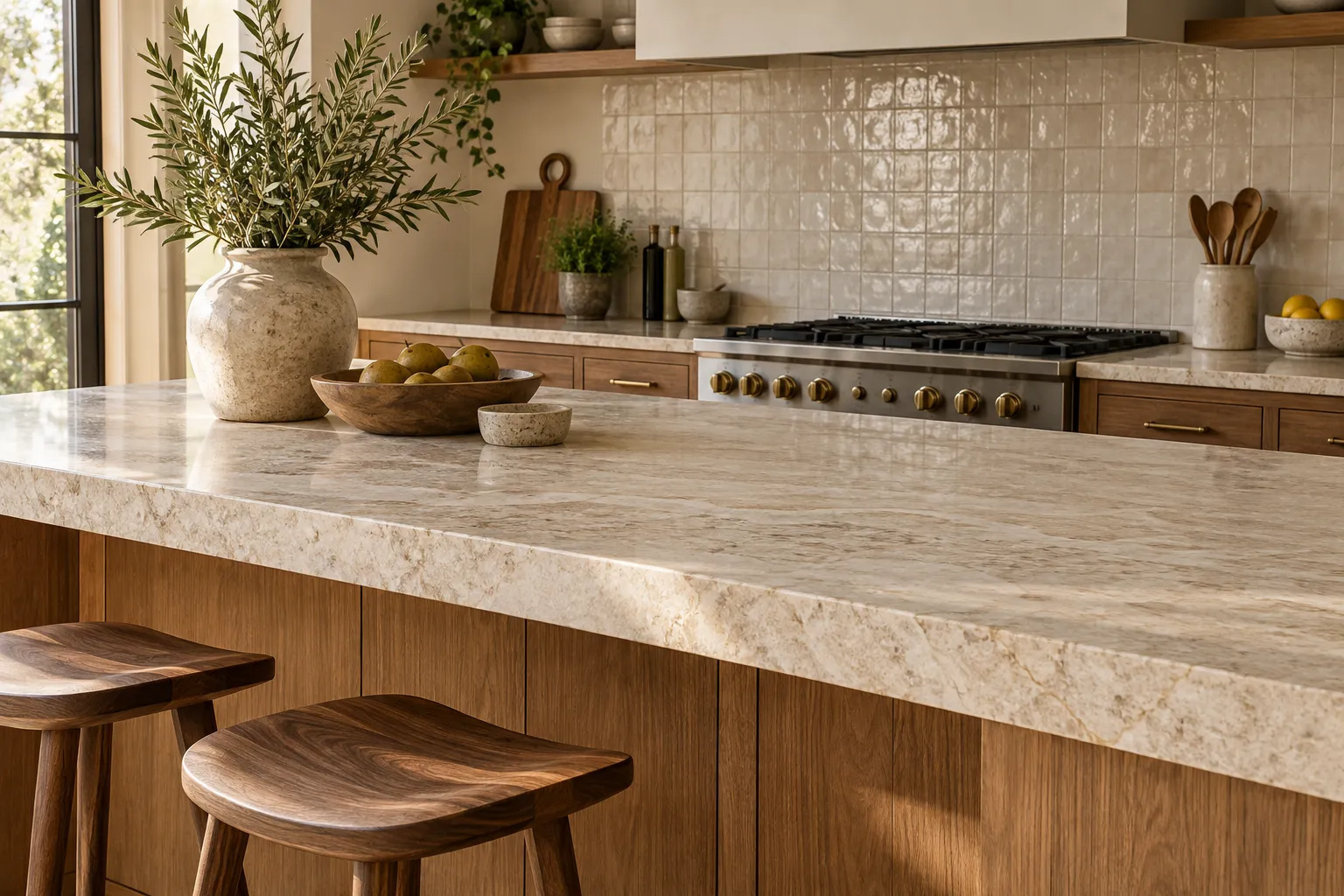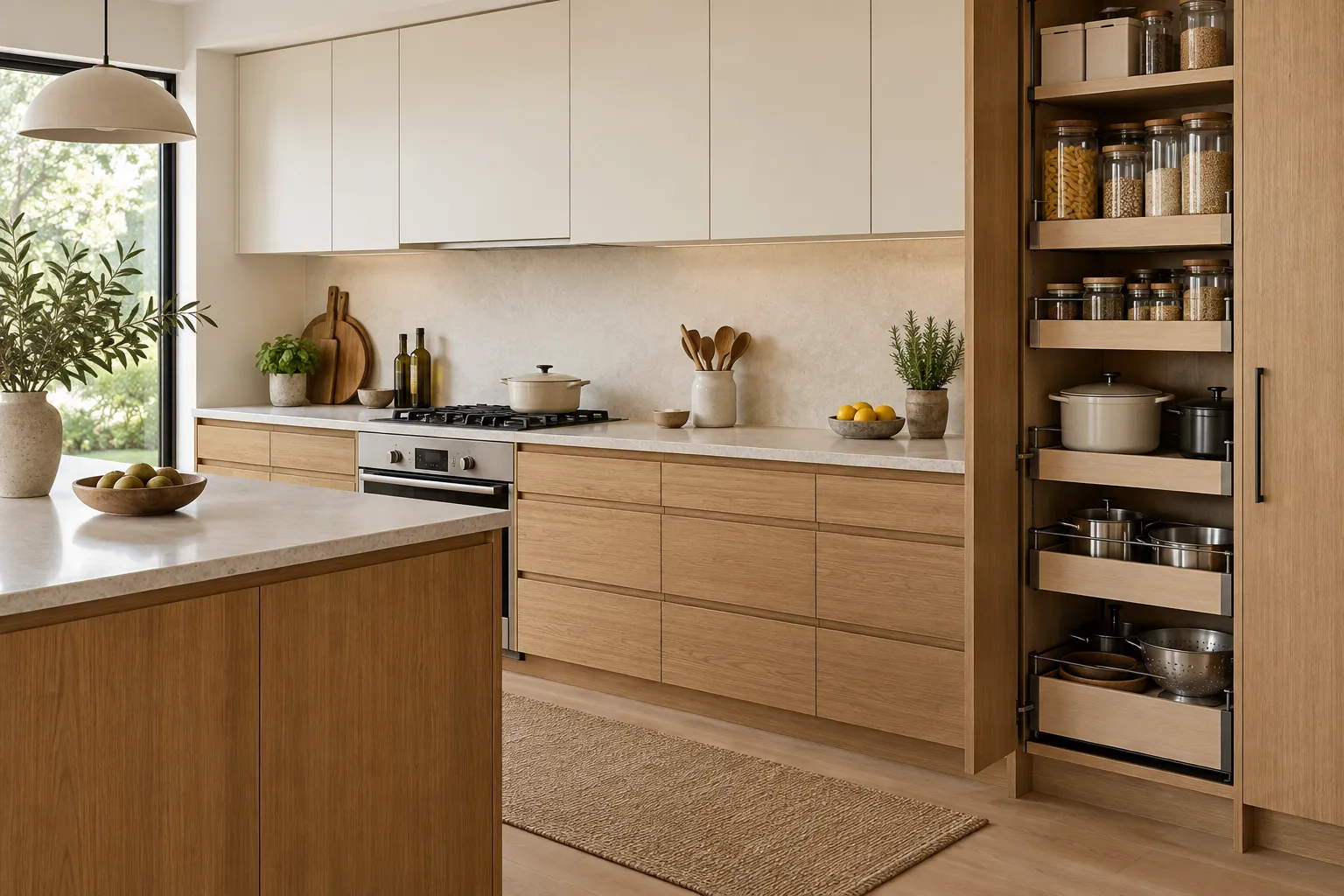
Kitchen storage works when it follows the sequence of cooking rather than the symmetry of cabinet doors. Ingredients need to be found, tools reached, food prepared, pans cleaned, and everything returned. A beautiful kitchen can feel tiring if those steps require repeated trips across the room or digging behind stacks of objects. Good storage does not require an enormous kitchen. It requires a clear account of what you own, what you use often, and where each action takes place. Begin by watching a few ordinary meals. Notice what you take out first, where you set it down, and which cupboard becomes crowded or hard to access. The result may challenge the usual categories of "pantry," "utensils," and "dishes." A small drawer beside the preparation surface can be more valuable than a large cabinet on the other side of the room. The aim is to reduce friction while keeping the space easy to clean and pleasant to look at.
Map the cooking sequence
Choose two or three meals you make regularly and trace each step from storage to preparation, cooking, serving, and cleanup. Mark where ingredients are collected, where chopping happens, and where used tools accumulate. If one person often cooks while another makes drinks or sets the table, observe where their routes cross. This simple exercise identifies the most useful zones more accurately than a generic diagram of an ideal kitchen.
Group objects by the task they support. Knives, boards, and frequently used seasonings belong near a comfortable preparation area, subject to safe storage needs. Pans should be accessible from the cooking area, and cleaning supplies should be close to the sink while stored appropriately. Dishes may be easiest to put away near the dishwasher or drying area. These relationships are not rigid rules; the layout of your kitchen and the people using it should decide the final arrangement.
Keep the first trial reversible. Move contents between existing cabinets before ordering inserts or new joinery. Label temporary locations if others share the kitchen, then live with the change for a week. A storage plan that looks logical on paper may reveal an awkward reach or conflict once a real meal begins.
Inventory before buying organizers
Pull out the contents of one cabinet at a time and group them by use. Count daily dishes, occasional serving pieces, pantry staples, small appliances, and items that have not been used in a long while. Measure the largest objects, including handles and lids. Many organizers are bought because a cupboard looks messy; they then consume valuable volume or fail to fit around hinges and pipes.
Decide what deserves the easiest reach. Objects used daily should not require a step stool or the removal of several other items. Seasonal tools can occupy higher or deeper spaces. If a kitchen is shared, make sure the logic is understandable to everyone rather than depending on one person's memory. A clear category can be more useful than perfectly matching containers.
Be cautious about decanting every ingredient into a new jar. It can look orderly, but it creates extra work, may separate food from important information, and requires containers that genuinely seal and fit. Use it selectively where it solves a real visibility or access problem. The goal is a kitchen that stays organized during use, not one that only looks complete immediately after a reset.
Make deep cabinets visible and reachable
Deep cupboards can hide useful space behind other objects. Pull-out shelves, drawers, turntables, or simple bins can bring contents forward, but each option has limits. A pull-out needs clearance around hinges and handles; a turntable may waste corners for rectangular items; a bin helps only if it can be lifted or slid out without strain. Measure interior width, depth, height, and door opening before choosing a mechanism.
Consider the weight of what will be stored. Heavy pans or appliances need a surface and hardware suited to the load. If retrofitting a pull-out system, check the cabinet construction and the maker's load guidance. A shallow drawer may be easier to use than a deep one if contents can be arranged in one visible layer. In some kitchens, moving rarely used objects out of the deepest cupboard is simpler than adding hardware.
Visibility reduces forgotten purchases. When ingredients and tools can be seen, it becomes easier to use what is already available. A cabinet with fewer objects and no specialized insert may perform better than a packed cabinet with elaborate fittings. The best solution is the one that makes the contents easy to locate and return.
Give drawers clear roles
Drawers are valuable because they bring contents into view, but they can become mixed piles without a simple plan. Assign each drawer a primary job: preparation tools, everyday cutlery, linens, or cooking implements. Place frequently used items near the work area where they are needed. Dividers can help, but fixed narrow compartments may become frustrating as tools change. Adjustable inserts or small removable containers often offer more flexibility.
Think about how fully a drawer can open and whether its contents remain visible at the back. Check that tall utensils do not catch under the counter. Heavy items require suitable runners and a drawer designed for the load. If you are planning new cabinetry, a mix of shallow and deeper drawers may work better than repeating one size for visual uniformity.
Avoid assigning every inch. A small amount of spare capacity lets the kitchen absorb a new tool without immediate reorganization. If a drawer is repeatedly overfilled, ask whether the category is too broad or whether some items belong elsewhere. A good drawer makes putting things away nearly as easy as taking them out.
Treat the pantry as a working system
Pantry storage should make food easy to see, date, and use. Group ingredients by cooking patterns rather than only by package shape. Baking supplies, breakfast foods, oils, and everyday grains may each need a different location depending on frequency. Keep heavy containers at a comfortable height and avoid stacking fragile packages where they can fall when something is removed.
Shelves that are too deep can make duplicates disappear at the back. Shallow shelves, stepped risers, or baskets may improve visibility, but test them with actual packages. Transparent containers can help in selected cases, yet original packaging may carry preparation instructions or date information worth retaining. Maintain a method for knowing what was opened first and what needs to be used soon.
Leave a little space for groceries arriving before the old stock is finished. A pantry designed to look full at every moment will be hard to manage after a large shop. Regularly clearing out expired or unwanted items is more effective than buying another set of bins. Storage capacity is valuable only when its contents remain understandable.
Plan around appliances and awkward objects
Small appliances often dominate kitchen storage because their shapes are irregular and their use varies. List the ones used daily, weekly, and rarely. A daily coffee maker may deserve a permanent place with easy access to power and water. An occasional mixer might be stored lower so it can be lifted safely. A device that requires clearing half the counter before use is less likely to earn its place.
Check ventilation, electrical guidance, and safe clearances for any appliance kept in a cabinet or niche. Do not assume a closed cupboard is a suitable operating location. Plan for cords and cleaning access, and keep outlets reachable. If a new kitchen is being designed, show the actual appliance dimensions to the designer instead of relying on generic categories.
Lids, trays, cutting boards, and baking sheets also deserve a deliberate home. Vertical storage can make flat items easier to retrieve, provided they are stable and do not damage cabinet surfaces. Large pots may be better stored with lids nearby rather than nested in a tower that must be dismantled. The right arrangement is the one you can use with one straightforward movement.
Decide what should remain visible
Open shelves can make a kitchen feel lighter and keep everyday dishes within reach, but they require a realistic approach to dust, grease, and visual order. Place them where the stored objects are genuinely useful and where cleaning is practical. A few frequently used mugs or bowls may work well; a shelf crowded with rarely used objects can become a display that demands maintenance.
Closed storage calms the room and protects some items from everyday exposure, but too many identical doors can hide a confusing interior. Combine the two approaches around use. A short open shelf near the table might hold daily ceramics, while lower cabinets contain less attractive tools. A cabinet with a glazed door can offer visibility without full exposure, though it still requires some organization inside.
Think about the view from neighboring rooms if the kitchen is open to a living area. The storage scheme should support a pleasant everyday appearance without forcing everything to be concealed immediately after cooking. A limited set of visible objects with a clear purpose often feels more generous than either total display or total blankness.
Make cleanup and maintenance easy
The storage plan should include where wet dishes dry, where recycling waits, and how cleaning tools are stored. These activities happen daily and can overwhelm a kitchen if left out of the design. Place bins where they are useful during food preparation and confirm that doors, lids, and pull-outs can open without blocking the main route. Store cleaning products safely and in accordance with their labels, especially in homes with children or pets.
Surfaces and inserts should be easy to wipe or remove. Decorative baskets may look attractive but can trap crumbs or moisture in the wrong location. A simple washable liner may be more useful. Leave access to plumbing and service areas; do not build a perfect-looking storage wall that makes a leak difficult to detect or repair.
Review the system after several weeks. Which items have migrated to the counter? Which drawers remain underused? These patterns are feedback. Adjust the arrangement rather than treating every deviation as a failure of discipline. A kitchen works best when it responds to how people actually cook and clean.
Make changes in the right order
Start with the least expensive decisions: edit duplicates, group by task, and move contents within existing cabinets. Then address specific problems with measured organizers or shelves. Reserve major cabinetry changes for persistent issues that smaller moves cannot solve. This order helps avoid paying for elaborate storage that merely conceals an unclear workflow.
Before buying a solution, ask what exact movement it will improve. Will a drawer put a pan within reach? Will a shallow shelf make ingredients visible? Will a cabinet free preparation space on the counter? If the benefit cannot be described simply, the product may be solving the appearance of clutter rather than its cause.
A useful kitchen is never perfectly static. Food arrives, habits change, and tools earn or lose their place. Give the system enough flexibility to adapt without becoming chaotic. When storage follows the cooking sequence, the room feels calmer because its organization is felt in every meal, not only seen when the cupboards are closed.
One final test is to put the kitchen through a meal that uses several tools at once. Notice whether clean items can be put away while food is being prepared, whether the bin can be reached without blocking another person, and whether hot cookware has a safe place to land. If the answer is no, identify the exact step causing the conflict before buying another organizer. Sometimes the solution is a different drawer assignment or a clear section of counter. Sometimes it is a more substantial layout issue that deserves professional advice. The best storage plan makes the necessary movements simple and leaves enough open space for the unexpected: an extra guest, a large grocery delivery, or a new way of cooking. That flexibility gives the kitchen a longer useful life than any perfectly fitted set of containers.
Store by task, frequency, and visibility; buy organizers only after measuring the actual cabinets.
These are general design considerations. Product dimensions, materials, installation requirements, and care instructions should be checked with the relevant maker or professional before purchase or work begins.